Research Profile
In Focus Artificial and Human Intelligence
CoDesign research primarily focuses on pursuing methods from, and interactions between Artificial Intelligence, Spatial Cognition and Computation, Cognitive Science and Psychology, Human-Machine Interaction, Design Science.
Cognitive Vision
Cognitive Vision pursues an emerging line of research bringing together a novel and unique combination of methodologies from Artificial Intelligence, Vision and Machine Learning, Cognitive Science and Psychology, Visual Perception, and Spatial Cognition and Computation. In essence, we address vision and perception at the interface of language, logic, cognition, and artificial intelligence. Presently, a key focus is on general methods for the processing and semantic interpretation of dynamic visuo-spatial imagery with a particular emphasis on the ability to abstract, learn, and reason with cognitively rooted structured characterisations of commonsense knowledge pertaining to space and motion. With a focus on explainable visual sensemaking of dynamic visuospatial imagery, a core emphasis is on the integration of methods from AI and Vision with a focus on (combining) declarative reasoning & learning about space, action, motion, and interaction. Research is pursued in the applied backdrop of areas as diverse as autonomous driving, cognitive robotics, design (for visual art, architecture, visuoauditory digital media), and behavioural visual perception research in cognitive psychology.
The DesignSpace Group
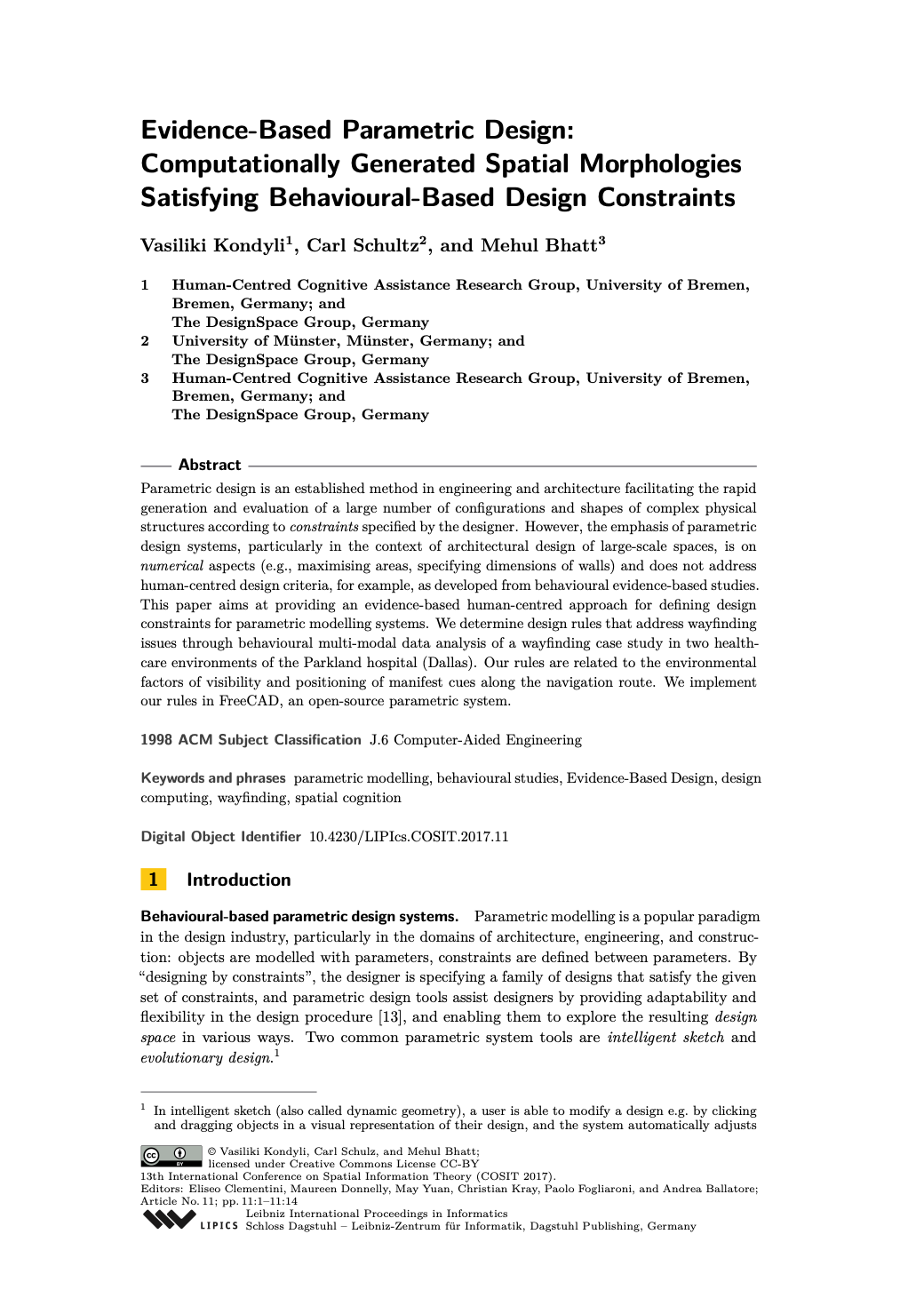
DesignSpace is a research and consultation group focussing on the development of cognitive technologies and educational discourse for people-centered spatial thinking and architecture design. DesignSpace has developed and applied AI-driven cognitive assistive technologies for people-centred usability analysis and building performance evaluation at all phases of the architecture design process, including design conception, preliminary prototyping and iterative refinement, and evidence-based post-occupancy analysis of building performance / usability. A specific applied focus has been on design-time planning and post-occupancy analysis of user experience, signage design, interior design, e.g., involving navigation studies, visual perception, and wayfinding.
Spatial Reasoning
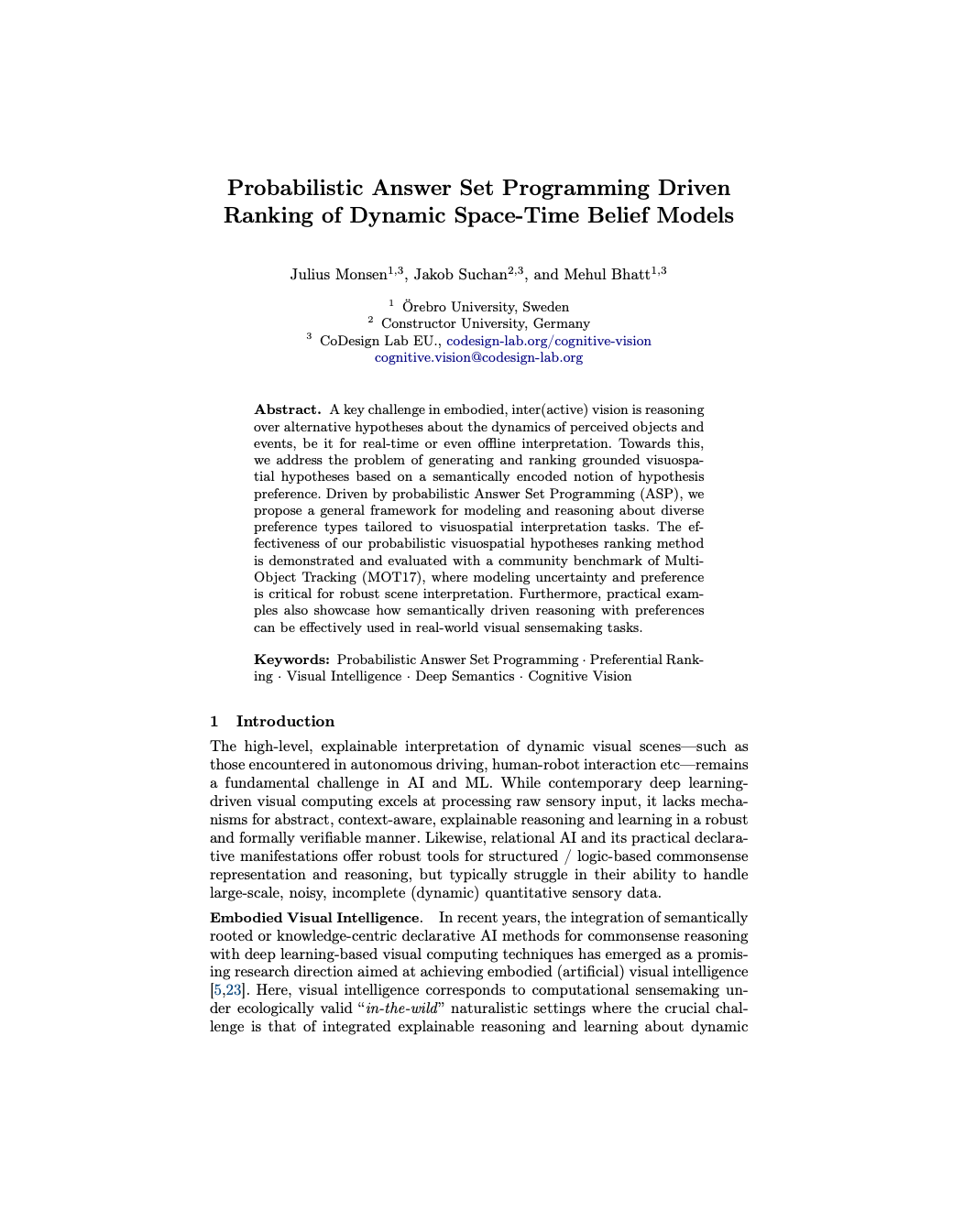
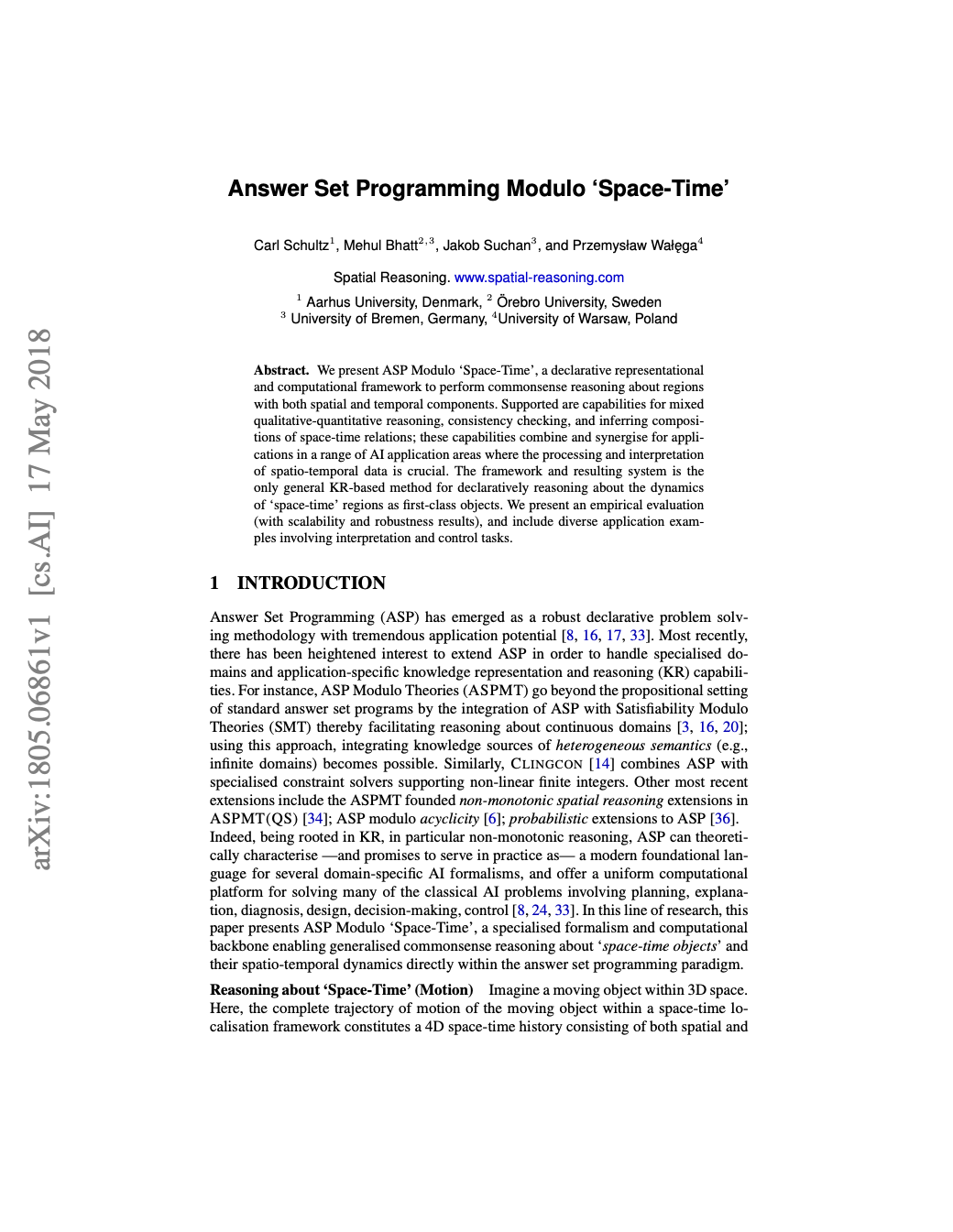
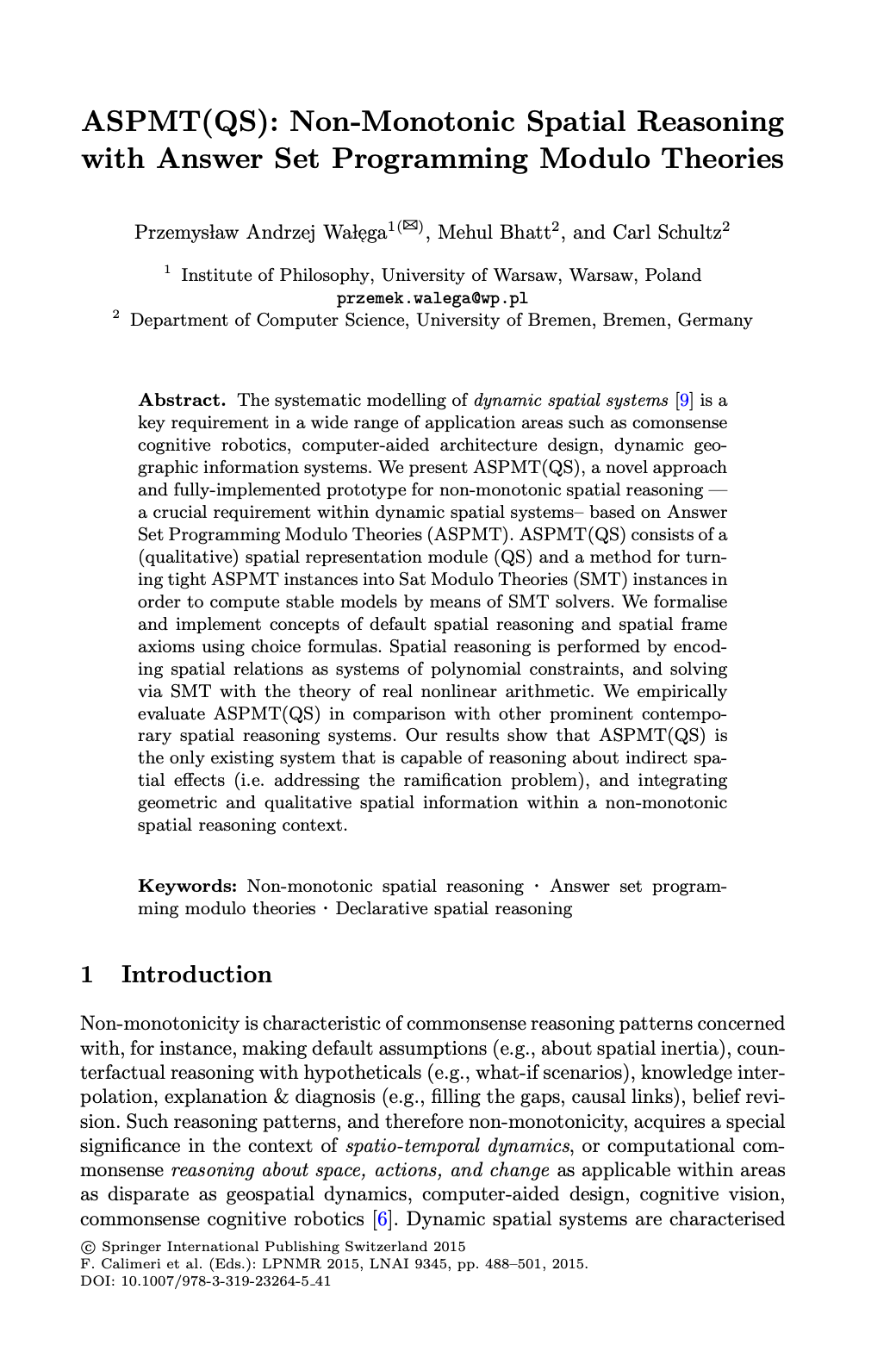
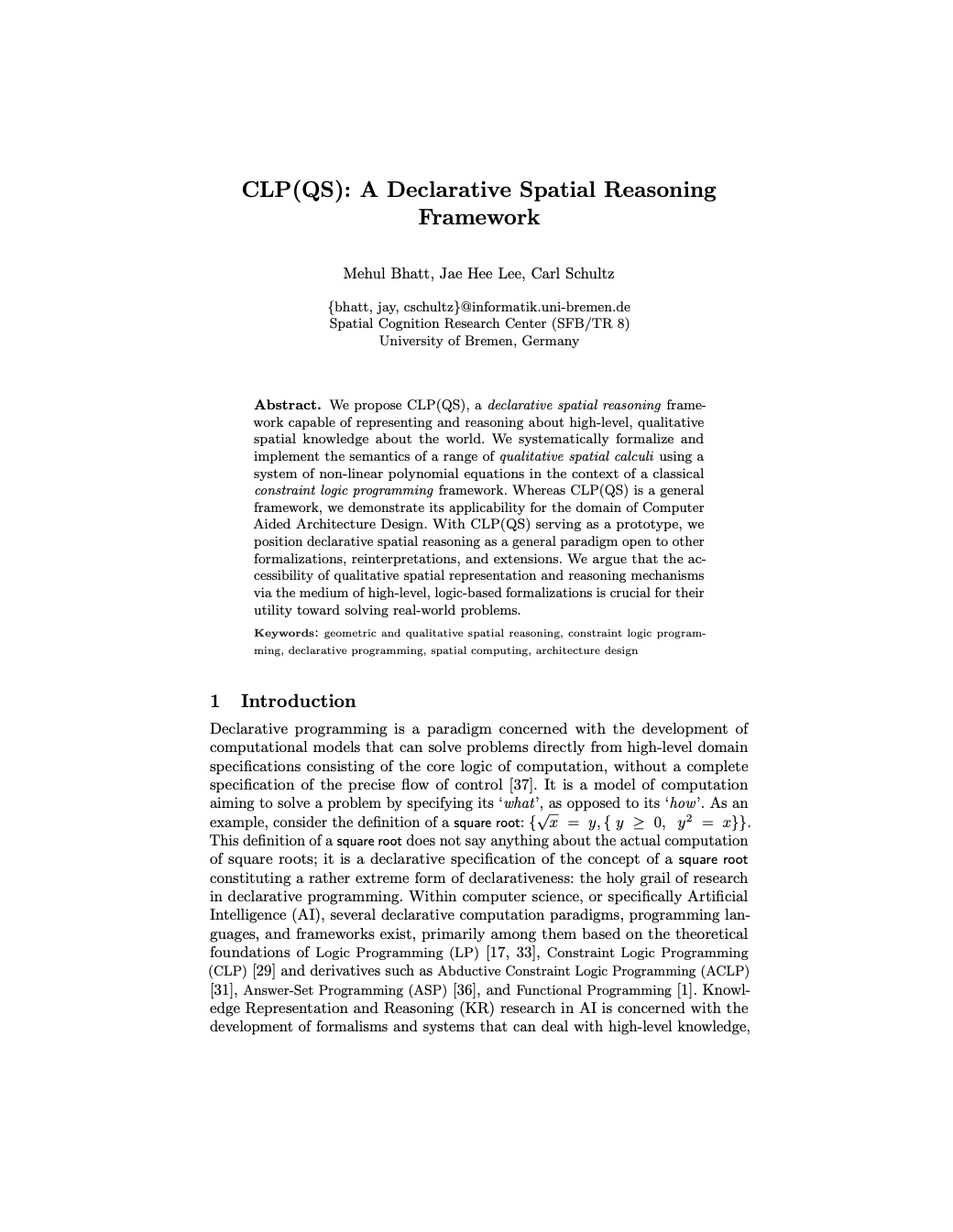
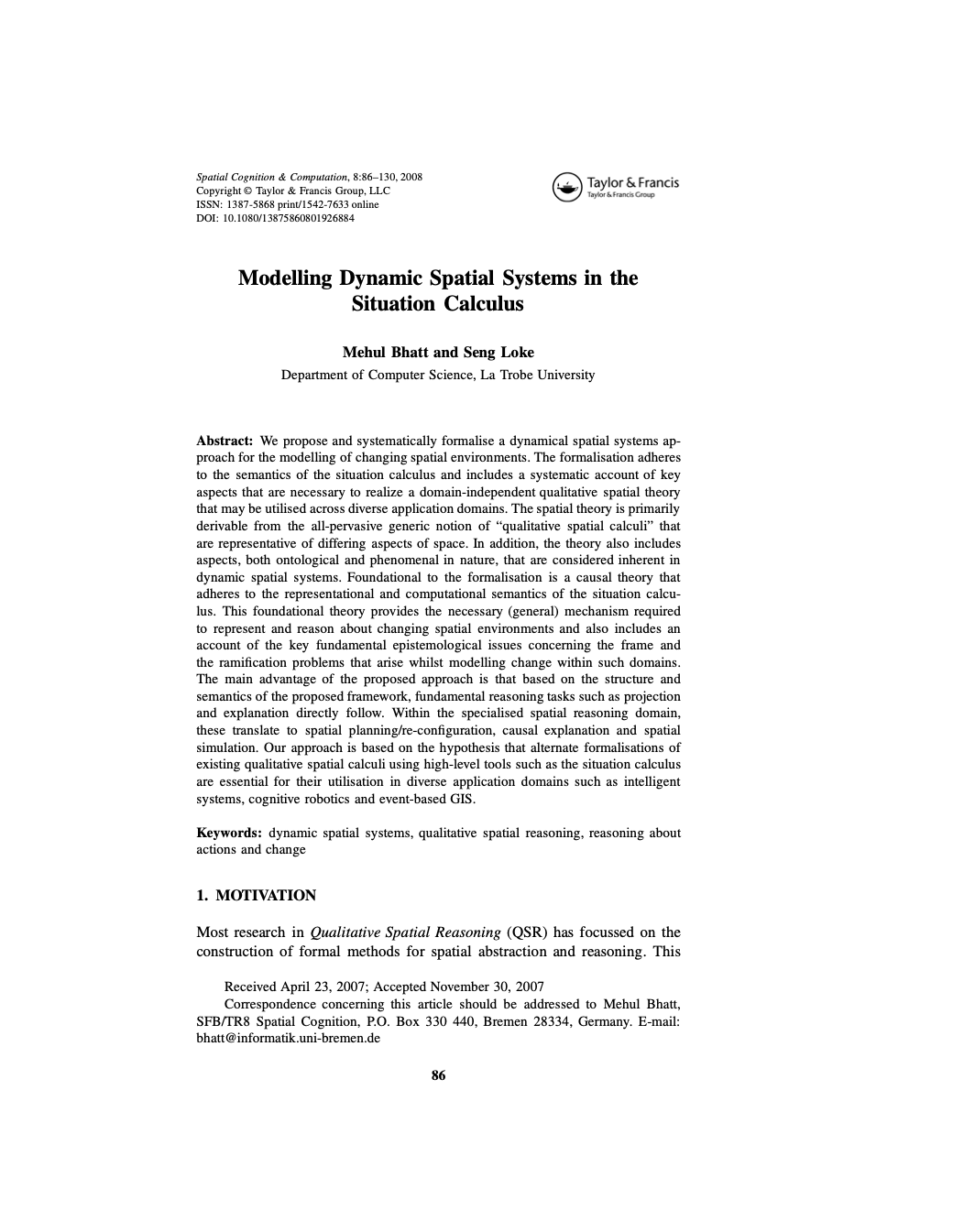
We develop computational visuospatial representation and reasoning from the viewpoint of the research areas of artificial intelligence, commonsense reasoning, and spatial cognition and computation. The key focus is on declarative spatial reasoning: the ability to (declaratively) specify and solve real-world problems related to mixed geometric (i.e., quantitative) and qualitative visual and spatial representation and reasoning.The practical problems that we address and demonstrate in this context encompass both specialist and everyday commonsense reasoning instances identifiable in a range of cognitive technologies and spatial assistance systems where spatio-linguistic conceptualisation & background knowledge focussed visuo-spatial cognition and computation are central.
LAB ACTIVITIES / APPROACH
-
Scientific Forums. Knowledge Transfer.
CoDesign Lab steers a range of thematically specialised symposia, workshops, tutorials, (interdisciplinary) summer schools addressing the scientific confluence that is of central significance to the CoDesign research agenda. Knowledge transfer activities are directed at specialists, industry practitioners, as well as the general public.
-
Research Output.
CoDesign research and developmental work is most typically published in peer-reviewed scientific forums in Artificial Intelligence, Cognitive Systems, Cognitive Psychology, Design Cognition, Architecture Design, Media Studies. Typical outlets include IJCAI, AAAI, ECAI, ACS, KR, LPNMR, JAIR, AIJ, ACM TAP, TPLP, CRPI, Spatial Cognition, Vl/HCC, COSIT, ACM SAP, etc.
-
Applications.
Directly addressing applications in autonomous cognitive interaction systems (e.g., requiring high-level cognitive interpretation, human-machine interaction and control), architecture and built environment design, communications and digital media (analysis and design) technologies (e.g., focussing on multimodal perception and synthesis, visuoauditory media design), visual sensemaking for autonomous driving.
-
Collaborations.
The lab emphasises and most values its international collaborations through joint research and related development of strategic initiatives with partners across Australia, Europe, India, Japan, New Zealand, United States. We welcome and are inspired by diverse formats to do things together.
-
Interdisciplinarity.
We emphasise top-down and bottom-up interdisciplinarity synthesising methods in AI, Cognitive Psychology, Multimodal Interaction, and Design Science. Research areas do not merely borrow methods from one another, but instead co-develop: mutually influence, inspire and shape respective scientific thinking and interpretation and dissemination of results.
-
Industry Transfer. Consulting.
Conducting industry-scale R&D projects, as well as short-term consulting on specialised themes involving prototying, development of case-studies, and offering continuing education training, e.g., on topics in AI, Cognitive Systems, (Evidence Based) Architecture Design, AI for Build Environment Design, Vision for Autonomous Vehicles, AI and Entertainment, AI and Social Media.